How to Survive Deleting a Character From Your Story #Writer #AmWriting

Writing the death of a much-loved character can be demanding and can leave you inconsolable.

There is, however, another literary situation which can be just as challenging and it can cast a nasty gloom over your writing day – deleting a character from your story.

I am not talking about deleting a random minor character; someone who you created one day after too much coffee, inserted into the middle of your novel, just to beef it out (technical literary term) and then deleted them the following day after realising your stupidity. Sigh!

No – I am talking about when you make major changes to your draft and you decide to get rid of a key character. They will be a fictional person who has been with you since the start of your story and someone who you have history with. The awful thing is that you know a change like this needs to happen and..dare you say it..your story will be better without them.

This situation can play havoc with your emotions as you have to ERASE this fictional character from your story and then act like they NEVER existed!

You don’t know about literary heart-break until you have experienced severing all ties with a fictional character.

So, if you are an emotional writer like me, you will find deleting an existing character tough going.

Here are some useful tips on how to survive this dark literary time:

  1. Once you have made the decision to delete them from memory don’t spend hours deliberating. If your gut is saying ‘delete them!’ – do it!
  2. Save a copy of your draft with them playing a part in your story. You may need this when you wake in the middle of the night, drenched in sweat, clutching your loved one and whispering “I shouldn’t have deleted [enter character name of choice]”.
  3. Perform your delete swiftly and humanely. They won’t feel a thing! Ask your ‘find’ button for some much-needed support with this.
  4. Prepare yourself in advance for a tough clean up operation post deletion. This will involve, what we in the trade like to call, some quick and dirty editing. Adjusting those scenes involving another character having a heated conversation with your now deleted character or where a character was in the middle of a romantic embrace with the one you have just cruelly deleted. The latter scenes are the hardest to mop up in this situation.
  5. Things will feel a bit different for a while after the deletion. You might feel a bit raw / needy for a few days. For noting: if your loved one is unsympathetic with you after a character death, don’t expect ANYTHING from them post a character deletion. The best you will get is an eye roll! You are on your own with this one.
  6. Tell yourself that your deleted character’s time will come again. Don’t dwell on the fact that you erased them from this story because they were dull / weak / surplus to requirements or replaced by a better looking character. Reassure yourself with a comforting phrase like square peg in a round hole!
  7. Prepare to hear your deleted character’s name in real life conversations after the deletion. Bite your bottom lip, steady yourself and go make yourself a nice sugary cup of tea.
  8. Talk your feelings through with a sympathetic writer friend.

Take it easy readers!

Have a great day!

Photo: Pixabay

How My Writer’s Block Was Cured By A Life Affirming Moment #MondayBlogs #Writer

If you read my post about writers needing to learn how to heal themselves from creative pain, you will know that I recently experienced an awful strain of Writer’s Block. For weeks I was hard work; I wore a glum face, I stopped working on my second draft, I questioned my creative abilities, I did a lot of moaning and every time I sat down to write I froze.

Then something really odd happened to me. I had a weird moment – which CURED my Writer’s Block – gasp!  It has taken me a few weeks to work up the guts to tell you all about this thing that happened to me.

Before I go any further I need to clear some stuff up. You see, I know my BWM blog readers very well and I know that after reading about this ‘weird moment’ they will have a few questions for me…

When this weird moment occurred I was NOT:

  • Half way through a delightful bottle of Rosé wine.
  • Highly caffeinated.
  • High on sugar.
  • Craving carbs.
  • About to choke on a cheese and chive crisp, coated in a tasty garlic dip. 
  • In the middle of a hormonal fluctuation. 

I was actually in the company of some wonderful writing and blogging friends. We were discussing our respective creative projects. I was sat looking like a bulldog chewing a wasp and hating everything about my half-finished second draft.

Before I go into the weird moment in detail, because I am sure you are all on the edge of your seats, I am just going to quickly fill you in on my creative journey so far. Trust me this will only take a couple of lines!

So, I have written a few stories in my time. Some are published on Wattpad, some have been on my blog and the rest are in folders in the attic, never to be seen again, ever!

I have not gone down the publishing / self publishing route with any of my stories because:

  • I believe writing is an apprenticeship so I have been busy acquiring experience, and
  • I have never felt strongly about any of my stories to go down those routes. Yes I turned the Roxy series into a podcast, but that was more about me enjoying myself after a few gin and tonics strong coffees and learning about how audio can enhance my writing.

Anyway, so there I was in the lowest of creative moods. My half-finished second draft felt like it was dead to me. This is what can happen with Writer’s Block. It really is a terrible ailment. My block was so bad I was on the verge of putting my draft in a folder, in the attic.

One of my writer friends turned to me and suggested I start talking about my half-finished second draft novel. I shrugged, exhaled loudly, rolled my eyes and started talking about my novel, the plot and characters etc.

As I talked about my story, my reasons for writing it and why it used to excite me, I felt something inside my chest.

Something was tugging on my heartstrings. My cheeks started to warm up, heart started to beat faster, I started to tremble and my voice sounded thick with emotion. All my characters from my story rushed into my head and I was overcome with emotion at the sight of them.

I explained how I was feeling to my writer friends and they passed me some tissues. It then hit me – I was having a life affirming moment over my half-finished second draft. Gasp!

My half-finished second draft was not dead to me, in fact it was quite the opposite; alive and well, deep inside me. Once I had taken control of myself I knew that this moment meant something. I have an emotional connection to my second draft and somehow I have to carry on.

I have never experienced anything like this before.

The minute I got home from visiting my writer friends I started to write. Since then I have not stopped either!

Talking about my story made me realise how much I love it and how passionate I am about it. This in turn resulted in a life affirming moment which cleared my Writer’s Block.

If you are troubled by Writer’s Block, try talking about your story and see what happens!

I love this quote from Roald Dahl’s My Uncle Oswald:

“If you are interested in something, no matter what it is, go at it at full speed ahead. Embrace it with both arms, hug it, love it and above all become passionate about it. Lukewarm is no good. Hot is no good either. White hot and passionate is the only thing to be.”

Have a great day!

Photo: Upsplash.


5 Stages of Being Obsessed With Your First Chapter #SundayBlogShare #AmWriting


First chapter obsession is a known form of literary hell. Sadly there is no escape.

There are five stages and they might go something like this…

  1. Unrealistic expectations. With a goofy smile on your face and a head full of characters, plots and adverbs, you set out to write your literary masterpiece. As with any creative project you kick things off by setting a few unrealistic expectations; you will write a minimum of 2,000 words a day, you swear blind that you will stick rigidly to your plot plan and you will NOT get obsessed with your first chapter. In your head writers who have First Chapter OCD are newbies who have no self-control. Your first chapter is going to be amazing and will slam dunk your reader into your novel.
  2. Euphoria. You are sat in ‘Writing Corner’ squealing with literary delight at your first draft. It is quite simply a masterpiece!  It sounds so good, you are seriously debating whether it needs further rewrites. After a huge yawn and a bit of a stretch you alert the world, via Twitter, that you have finished your first draft and it is #outofthisworld. As you sit back in your chair, gazing longingly at the first page of your draft novel, your eyes casually skim read the first few paragraphs. Your stomach clenches and your mouth runs dry. A little voice inside you whispers ‘they are going to need some tweaking!’ 
  3. Denial. Whilst you ‘rest’ your beloved first draft in a drawer, for a few weeks, you keep yourself busy by binge reading articles and books on the craft of writing. The only thing you take from this diet of writing advice is that your first chapter needs to be as hot as your literary pants! Forget the rest of the novel, the first chapter sells your book. You reassure yourself that your first chapter was hot (albeit in need of  some light tweaking) before you put it away. Once your draft has rested you fish it out and read! It is at this point that you start to realise your first chapter is going to need more than a ‘light tweak’. Your gut tightens, causing you to exhale loudly. A few days later and you are still fiddling with your first chapter. A little voice inside you whispers “you are getting obsessed with your opening chapter – what about the rest of the book?”  You deny this straightaway – how could your mind come up with something so ridiculous! You are not obsessed! 
  4. First chapter obsession. You can’t leave the damn thing alone! Tweaking has turned into aggressive pruning and all you can see in your mind when you close your eyes at night are the words ‘rewrite!’  The rest of the novel is left alone whilst you butcher your first chapter, fuelled by all those articles you read whilst your draft rested. What really bugs you are those initial opening sentences which seem to haunt you in the small hours, making you sit bolt upright in bed, drenched in sweat. A loved one finds you in a tear-stained huddle on the floor whimpering “save me – my first chapter is still not right and I am obsessed with it!”  They tell you to get a grip of yourself and focus on the rest of your book. Your first chapter will sort itself out. After casting them a dark look, muttering some stuff about how they don’t know anything about writing, you get to work editing the rest of your novel.
  5. False Hope. You don’t like to admit it but your loved one’s advice proved to be valuable. After focusing on getting the rest of the book right you realised where you were going wrong on your first attempts. You finish your second draft and with a goody smile back on your face you send it out for beta readers to review. Your obsession with your first chapter is over. For the first time in weeks you have been sleeping like a baby at night and you can go through an entire day without thinking about your first chapter. A month later and your email box contains all your beta reader feedback. With that same goofy smile on your face you start to wade through their feedback. As your loved one sits down to relax and drink a nice cup of tea they hear a piercing scream from Writing Corner. They groan as you charge into the living room red faced, sobbing and clutching your draft. Those pesky beta readers believe your dreaded first chapter needs a LOT more work and may require a rewrite. 

First chapter OCD is a terrible ailment and I have much sympathy for any of my readers currently experiencing this.

Good luck out there. All I can say is that therapy does work🙂

Photo: Upsplash.


The Hidden Benefits of Writing Whilst Emotional #SundayBlogShare #Writers

Once you try writing whilst emotional (weeping / sobbing / on the brink of crying / blinking away tears) you will discover a number of hidden benefits.

I stumbled upon this crazy badass writer technique whilst writing my debut novel. My first chapter makes me cry. No BWM readers – its not because my draft sounds so bad it makes me tearful nor is it because my first draft is jam packed with sob inducing typos – sigh!  There is one really sad part which I wrote a few weeks ago and every time I read what I have written I start to weep. God help my future readers – I just hope they know what they are letting themselves in for when they buy my book! Does anyone know whether fiction books contain emotional health warnings?

During one of my literary breakdowns, after reading my first chapter, I decided to carry on writing whilst emotional. It was a game changer!

There are a few hidden benefits of writing…whilst a little weepy:

  1. YOU DO NOT GET DISTURBED! Loved ones go out of their way to avoid you, once they see you snivelling into your draft. They take one look at you, raise their eyebrows, shake their head and flee the house. You get at least a couple of hours to yourself. It is almost worth investing in some sort of little squeezy bottle, which can give you false tears whenever you feel like a bit of quiet writing time.
  2. Deep stuff. You write some deep and meaningful stuff whilst emotional. I have also found that you rarely have to edit this deep stuff.
  3. You don’t hold back when you are emotional. This is great for your writing because you end up writing powerful and emotion-evoking scenes. Yes – you can tone down the heavy stuff at editing stage but I think being emotional just makes you put it all out there. Pour your heart out readers.
  4. Sharing your character’s emotional journey. I think sharing their emotional journey brings you closer to your characters and helps you get inside their head.
  5. ‘No tears in the writer, no tears in the reader’ (Robert Frost). Inject your emotion into your story and watch it reappear in the reader. I know this works because when I killed off one of my main characters in the second book of my Wattpad Vampire novella series, I bawled like a baby as I wrote it. My goodness I was a snotty and weeping mess for hours! My loved one made a sharp exit to the pub as soon as he heard me start to wail from the sofa. Once I published this literary gem I was inundated with messages from upset readers who in some cases, informed me that they couldn’t see the vote button as their eyes were streaming so much. Things got so bad I had to take the book down as there was an angry reader outpouring. Anyway, I think Robert Frost knew what he was talking about when he wrote this marvellous quote.
  6. Enhances your word choices. It is amazing how many different words spring to mind when you are a teary mess. Words you wouldn’t have previously considered using appear in your mind. It is like the emotional outpouring opens up a new literary side to you.
  7. You make some interesting noises. Sniffs, sobs, weeping and nose blowing sounds all make a refreshing change from grunts, groans and sighs. 

Cry into those drafts readers! 

Now, I am already thinking about weird and wacky writer’s Christmas gifts. If there are any tissue makers out there reading my blog – what about a box of Writer Tissues?  This would be a much needed gift for writers who, like me, enjoy getting emotional whilst writing.

Have a great day!

Photo: Adobe.

Writer’s Intuition #SundayBlogShare #Writer #AmWriting


When you start using your writer’s intuition, it is like another person joins your literary party.

Before I discovered my writer’s intuition it was just me and my creative muse. Now, I know this will come as a shock to most of you, but my creative muse is very much like me – bat poop crazy!  This is why we get on so well and spend so much time together…in a darkened room. Once I started listening to my writer’s intuition it was like a sensible person had joined our literary party.

There are several stages to discovering the existence of your writer’s intuition and listening to it:

  1. Literary Euphoria. You are experiencing a powerful literary high. Your half-finished draft sounds so good it would make a literary agent’s eyes water and if a publisher read it now they would struggle to contain their excitement. As you sit back in your chair and admire your masterpiece you get a wonderful new idea. Instead of sticking with your original plot plan, maybe you could throw caution to the wind and take your story in a different direction. Yes! This would make it seriously AMAZING. A little voice, from somewhere deep inside you, tries to stop this madness, but it is sadly drowned out by a glorious trumpet fanfare. With an excited squeal you and your creative muse leap into action. All your characters are informed that things are going to change.
  2. Mistaken Identity. A few thousand words later and things are not looking so bright. You are not feeling yourself. Nothing you do seems to shake off this weird sensation in the pit of your stomach. It came on when you decided to completely change the direction of your novel. You put the weird sensation down to a case of ‘dodgy guts’ and ask a loved one for some stomach settlers. Having that take-away meal last night probably wasn’t wise and guzzling down all that wine didn’t help too. The weird sensation in your belly persists. You come to the conclusion it’s fibre related and start bulk buying prunes and dates.
  3. Denial. In a conversation with a close writer friend you explain that you have made drastic changes to your draft novel and coincidently ever since you made these sweeping changes you have been suffering with a severe case of ‘gut rot!’ Your writer friend asks whether the two incidents are related. They are most certainly NOT related. The only thing your gut is trying to tell you is that you need to eat more prunes!
  4. Discovery. Two thousand more words later and you start to wonder whether your gut is trying to tell you something. Gasp! Maybe that weird feeling is connected to this new direction you have taken with your draft?  Cue the return of that little voice which tried to argue with you at the start of this wild goose chase. It told you that taking your story off in a different direction wasn’t a good idea and that you should have carried on with your original plan. You read through the new bits of your draft and you find yourself whispering ‘maybe you had a point!’ 
  5. Hope. The moment you decide to go back and delete the ‘new direction’ stuff the weird sensation in your gut disappears. Gasp! What a relief! This literary experience has taught you that the little voice inside you is your writer’s intuition. It is there to give you guidance and to stop you and your creative muse from going bat poop crazy!  The hard bit is listening to it.


In terms of using your writers intuition here are some cool tips:

  • Listen to your inner self when writing. Pay attention to strong hunches, weird sensations, not feeling right about something and on the flip side those odd literary moments where you know you are on the right lines, you can’t explain why, but you know you just have to keep going. 
  • Meditate. It’s tough to start doing but it does force you to be alone with your thoughts. You can’t help but listen to that little inner voice.
  • Don’t make rash creative decisions. I love making rash decisions but I am starting to learn (the hard way) that my original plan was always the best policy.
  • Accept that your writer’s intuition is going to be unpopular. Nine times out of ten neither you or your creative muse will like what your writer’s intuition is saying. Yes it will sound like a literary party pooper but do yourself a favour and listen to it!


Let me know whether you rate your writer’s intuition?  Are you using it and more importantly do you listen to it?

Have a great day!

Photo: Upsplash


Writers: How to Tame a Wild Character #MondayBlogs #Writer #AmWriting

I love wild and unruly characters. You know the ones who just want to have a good time, the ones who refuse to do what you want them to do, the ones who do not let you into their head or the characters who take us off on wild goose chases.

Of course it’s never the author’s fault that their imaginary friends are running riot….um…no…fault lies with the unruly characters! Yes!

Sometimes you do need to take control of your rebellious literary offspring.

Here is my guide on how to tame your wild character:

  1. For the really wild ones who like a good time – ask yourself whether you are living vicariously through your characters?  Are you getting carried away with living life through another’s eyes? It is a tough question to answer but worth a consideration. Some of my unruly characters like to enjoy themselves a bit too much (fake bakes, dating mysterious men and doing really bad karaoke) and sometimes I wonder there is a bit of me living out life through their eyes. Sigh!
  2. Admit that an unruly character is a sign that something isn’t working. Gasp! This is not easy especially for those of us who struggle with admitting we are wrong. Put aside your ego and ask yourself whether your mischievous character is trying to tell you that something is wrong with your plot or your ideas on characterisation.
  3. Switch POV. I like to take a scene with a character who refuses to do what I say and rewrite it with a different POV. This can throw up some really interesting results. It feels like a load of extra work but viewing them from a different perspective helps you understand them better, which in the long run might help you control them.
  4. Let them have their way for a scene or two. This is not easy, especially for those of us who are literary control freaks. Basically you tell your wild character to do whatever they want and you see where it leads you. It may help them get something out of their system or in my case you could end up spending a few days eye rolling at them.
  5. Undertake a character questionnaire. I hate to say this but when characters are unruly it does mean they are not developed enough. My favourite questionnaire is this one which has 156 questions. Nothing escapes this gem!
  6. Do they have enough conflict or pain in their fictional life or do they need more?  Are you really challenging them or is their behaviour a result of them having too much free time on their hands? Give them some more pain! This works a treat and brings the unruly ones into line. Dig out your notes on their backstory and see how you can crank up the conflict. That will teach em! Sigh!
  7. If they still won’t listen – rewrite them! I have had to take this sort of decisive action with one of my characters. She was given a lot of warnings and still refused to do what I asked.

If these 7 tips don’t work you can always try…sending them straight to bed with no TV or Twitter!

Have a great day!

Photo: Pixabay

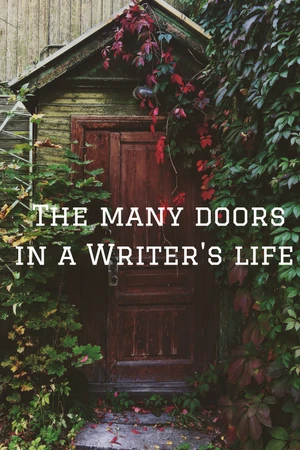
The Many Doors in a Writer’s Life #Writers #WritersLife #AmWriting


writing-doors-2

Photo Credit: Upsplash.

Inspiration for this post has come from Helen Jones who blogs at Journey to Ambeth. 

I have started reading the first book (Oak and Mist) from Helen’s series ‘The Ambeth Chronicles’ and I am hooked!

At the start of ‘Oak and Mist’ Alma finds a doorway to another world between two trees in her local park and this is where the idea for this post came from.

So, I forced myself to put Helen’s book down for five minutes and started thinking about the many doors in a writer’s life. I don’t know what it is about doors but once you start thinking about them you can’t stop..sigh!

  1. Writing the opening line of a story is like building an imaginary door. Stories are like doors that open and transport the reader off to a different place, world or time.
  2. A painful episode of writer’s block can feel like someone has locked a door inside your mind and thrown away the key!
  3. Too many plot ideas can feel like you have a head full of open doors.
  4. The special story that we can’t write or isn’t ready to be written, is kept behind a locked door in our mind. Hands up who has one of these? I do – please don’t say I am the only writer who has one of these! Mine is….Steampunk – gasp!  One day I will find the key (guts) and write it.
  5. Getting a creative epiphany can feel like a new door is opening.
  6. Sometimes we decide to sadly close the door on a story that is no longer working.
  7. Sometimes we have to force ourselves to close the door on a first draft. It needs to rest.  However we have such a strong emotional attachment to it that we struggle to leave it alone.
  8. There is nothing like a spot of door slamming when you are in the midst of a creative tantrum. I like to quickly follow mine with an angry stomp up the stairs. Sigh!
  9. Certain fictional characters can get so annoying inside your mind; jumping up and down, shouting and moaning. Grrrr – you feel like chucking them in a room and locking the door – until they have quietened down!
  10. Closing the door on your past literary mistakes and failures can be liberating.
  11. Only you hold the key to the door which contains your literary dreams. No one else can unlock it, only you. A tough one to come to terms with.
  12. Door symbolism in writing can be really useful. Doors can symbolise opportunity, hope and the passage from one world to another. They can also be great symbols of entrapment.
  13. Doors can be great writer tools for building suspense and fear. In horror the reader is always left to imagine who is lurking behind that old door. The naughty writer might even add in a couple of moans, groans and a scream too!
  14. If a literary door shuts in your face – try another! 
  15. If you live in a busy family house like mine, sometimes the only place you can think and get five minutes to yourself is the bathroom. Creeping up there with a head full of creative thoughts and locking the bathroom door is one of my favourite pastimes. Sigh!

I hope you have a fabulous day🙂

How an Act of Creative Kindness Can Turn Around a Bad Writing Day #MondayBlogs #Writers


writer-kindness-2

Photo Credit: Stocksnap.

Acts of creative kindness can be really powerful. They are great to receive but the feeling you get from helping another troubled creative soul is pretty special.

I recently experienced a bad writing day. It didn’t start well and turned into a day of battling against negativity and self-doubt. So I took immediate action. I stuffed some chocolate into my mouth, drew some dark shadowy figures in my diary, sulked on the loo and had a strong coffee.

I managed to recover some of the day, but I still wasn’t feeling the creative love. Half of me wanted to write the day off as a ‘bad day’ and just forget it. 

Then I received a cry for help from one of my creative friends, who was struggling to make sense of a project. She was lost in the detail and desperately needed a fresh pair of eyes to help make sense of it.

So I put down my project and went to her aid. 

I told myself “just because I am having a bad and unsalvageable writing day, it doesn’t mean I can’t help turn around someone else’s day!”

We talked it through and it was like another part of my brain came alive. I got out a pencil, some paper and drew a chart. We then went through each bit of her project and used the chart to plot out the different elements.

Some time later and our impressive looking chart had solved her issue. She went away happy and I went back to my draft novel feeling refreshed and energised.

Helping my creative friend changed my bad writing day:

  • I was able to use a different part of my brain, which I think is great to do when you are stuck on a mammoth project like writing a book.
  • The buzz I got from helping someone else gave me some confidence and a nice feeling inside.
  • Going back to basics with a pencil and a piece of paper did something for me. I know it sounds silly but I went back to feeling like I was actually creating something. This is what being a creative person is all about. It is really easy to lose sight of this when you are just typing into a laptop for hours on end.
  • I felt like I had a made a difference to someone else’s writing day.


So, the next time you are having a bad writing day, see if you can perform an act of creative  kindness for another troubled soul. It can be big or small. 

The important thing is you reach  out.

Acts of creative kindness are good for the soul.

Have a great day!


If you are still having a bad day after all this listen to my free podcast ‘The Diary of Roxy Collins’ – Roxy’s dating adventures and motherhood issues will definitely bring a smile to your face.


Author Interviews @shuchikalra #Writerslife #Writers #Author

Author Interviews-2

Welcome to my Author Interview Blog Series!

This series allows me to interview some amazing and inspirational authors. In the interviews I glean some writing tips from them, find out how they have overcome their literary challenges and most importantly get some valuable insight into their creative life.

This week I am beyond excited as author Shuchi Singh Kalra is sat in my red interview chair. She is a ChickLit author from India, who loves Twitter and describes herself as a ‘free spirit, certified crazy, social awkward cat lady!’ My kind of author – sigh!

Hey, Shuchi! Welcome to my blog!  Please take a seat in my red chair.

Tell my readers about yourself and the book / books you have written

I currently have two books out in the market – both romantic comedies. The first one is ‘Done With Men’, which sounds like a Man-Haters Guide To The Galaxy but isn’t. It’s just a story of a ditzy girl who runs into a series of unfortunate disasters before she finds Mr.Right.

The second one is ‘I am Big. So What?‘ – India’s first plus sized romance. It is a light read but at the same time, touches upon issues of body shaming and self-love.

I like to create strong, zesty female characters that are flawed and yet very endearing. They are ditzy enough to mess up their lives but have it in them to put things back in place.

When did you write your first book?

I started writing ‘Done With Men’ in Jan 2013.

How long did it take to write your first book?

I finished Done With Men in three months flat and I’m still quite smug about it.

‘I am Big. So what?’ took me over a year to write.

What was your motivation to write your first book?

I always had recurrent author dreams of seeing a book with my name on it in a bookstore but I guess I took too long to actually do it. But hell, it’s never too late for anything.

What writing issues did you encounter along the way and how did you overcome them?

Writing a book is actually the easiest part about being an author. The real battle begins when it is time to publish and market your work. I don’t know how it works in the west, but book publishing in India is a rather slow process and by the time a book comes out into the market, an author is very likely to have lost interest in it.

The market for romance is thriving – there are new authors coming in everyday and readers have too much to choose from. This also translates into stiff competition and the need for aggressive marketing and promotion, which can be quite exhausting for an author. Two books down, I am beginning to enjoy it a bit through.

Did you go through any bad writing patches during writing your book – what kept you going?

Oh yes. I run into roadblocks and dead ends more often than I’d like. It helps sometimes to change track. If the story isn’t turning out to be satisfactory, I just scrap it and begin all over again instead of wasting too much time trying to make it work.

It can be disheartening at times to trash all that you’ve written but I always keep my eyes on the larger goal.

Are you a plotter or do you just write / see what happens?

I usually start off with a rough sketch of the story but I don’t plot very extensively. I begin with an idea and let the story take it’s course.

What is the best thing about being a writer?

With every book you write, you get to live so many lives and be so many people. When I write for a character, I have to “become” them in that moment to explore how their mind would work, how they’d respond to a situation and why they are what they are. I find that bit the most thrilling.

What is the worst thing about being a writer?

That you live and work in an isolated bubble and you are the only person responsible to keep yourself driven. Procrastination is practically an epidemic among writers and some days it can be difficult to rap yourself on the knuckles and get some real work done.

Have you ever considered quitting writing, and if so how have you worked through this?

I have had my periods of slumps and stagnation but quitting? Never! I love expressing myself through the written word but there are phases when motivation takes a nosedive. When that happens, I try my hand at something new (by new I obviously mean another form of writing). For example, if I’ve been stuck with a book chapter, I’ll write some poetry for a change. I have found that indulging in other creative activities like crafts etc. also helps considerably.

What does a typical writing day look like for you?

I run a writing firm so I am mostly juggling multiple projects at a time. Book writing is something I do when I can spare time from assignments, although I’d like to transition into full-time authoring eventually. I do most of my writing when my 5 year old daughter is in school or at night after everyone has gone to bed.

Do you suffer from procrastination and if so how do you handle it?

I think procrastination suffers from me. I can be such a slacker at times and I hate myself for it. And that happens only with book writing because when you are writing for businesses, you can’t afford to wait for inspiration to strike you. I keep pushing myself to write SOMETHING every day, even if it just small passage.

A small way forward is still a way forward and always better than stagnation.

Which is more important – plot or characters and why?

I think both those things are equally important. Intricate character development lends credibility to your story and makes it more realistic. It also helps the reader to relate more to your characters. At the same time, you need to keep the reader riveted with an interesting plotline and adequate twists and turns. I think one can’t do without the other.

What have been your 3 biggest learnings during your writing career?

  • It’s going to be slow. Very slow. There’s no such thing as instant gratification.
  • It’s not enough to be a good writer. You have to learn to market yourself well.
  • Don’t count on books for money, at least until you have a few bestsellers out in the market

How do you manage social media as a writer?

I manage it by being addicted to Twitter, which is the absolute wrong way to go about it. I am not a social animal but I’m definitely a social media animal. I love interacting with readers and interesting people online and I must say it has helped my book sales too.

Social media gives you a platform to express yourself as a person, which may motivate people to check out your other writings. I think it’s a great way to come across new opportunities and market your work.

Do you have any tips or advice for budding aspiring authors?

As pleasurable and satisfying as it can be, writing can be sometimes disheartening because the returns are not immediate and competition is high.

The best thing you can do for yourself is to keep trudging along.

Take it one step at a time and don’t jump the gun.

Do you suffer from writer’s block and if so how do you overcome?

When it comes to my professional assignments, I can’t afford writer’s block because there are deadlines to be met and clients to answer to.

However, when it comes to my books, I give myself more leeway to slack. Reading books from the same genre you are writing is the best way to break out of a block. It helps bring your mind into the same zone and you are much more likely to find a trigger for the words to flow.

Do you ever think of the next book whilst writing?

Yes. I’m usually thinking of too many books at the same time. But I try to work on one or at the most, two at a time just for the sake of my sanity.

What do you wear to write?

I work from home so you’ll usually find me in an old tee and a pair of shorts/PJs with my hair pulled up in a bun.

If readers want to get in touch how do they contact you?

I am fairly (okay, insanely) active on Twitter and I connect with most of my readers there. You could also email me for any queries.

Click for my website.

Wow – What a fab interview! 

There were so many things that stuck out for me in this interview:

  • I can really relate to ‘becoming’ a character in order to understand them and this can be exciting!
  • I think this is a great quote with regards procrastination – ‘small way forward is still a way forward and always better than stagnation’.
  • I can relate to being a ‘social media animal’ – love this!
  • Your learning about instant gratification is very true. You almost have to prepare yourself for years of small progress. 
  • The growing Indian romantic fiction market sounds interesting.
  • Your strong, zesty characters with flaws and wobbly bits sound like my chicklit character Roxy Collins. Yay – to these fun characters!

Thank you!
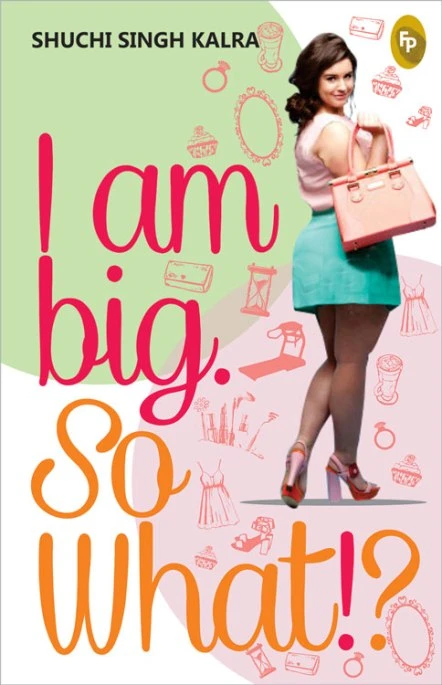
iambigsowhat_9

For more great interviews click here!

If you are an author and would like to be interviewed in my blog please get in touch!

photo credit: <a href=”http://www.flickr.com/photos/79577679@N00/5448848999″>the chair in the attic</a> via <a href=”http://photopin.com”>photopin</a&gt; <a href=”https://creativecommons.org/licenses/by-nc-nd/2.0/”>(license)</a&gt;

The Writer’s Pet Break #WritersLife #AmWriting #Writers

Photo Credit: StockSnap. 

This is a special kind of break for a writer and one that warrants a blog post.

There are 5 stages:

  1. Literary Turmoil. This stage is where the writer is in a creative mess. There are a number of reasons why a writer could be a little emotional over their work. So, for this post I have used the following scenario. The writer has just read some reviewer feedback on their beloved draft novel. In true writer style they have ignored all the positive comments and focused in on the negatives. Tears are streaming down the writer’s face as they over think the small piece of constructive criticism, relating to the start of chapter eight. After a good nose blow the writer will look up from their writing desk, in the hope that there will be a sympathetic loved one on hand, to give them a cuddle, a gentle hair ruffle and tell them that everything will be alright. Sigh!
  2. The Disappearing Loved One. Sometimes I wonder whether a little alarm goes off inside a loved one’s brain, when their beloved writer is having a creative and emotional breakdown. As they always seem to disappear when a writing crisis occurs! I can’t think why a loved one would want to run for the hills, after catching sight of their tear-stained writer, rocking in the corner, clutching a crumpled email from their reviewer and muttering some bad stuff under their breath. So, the writer’s turmoil gets a lot worse, once they hear the slam of the front door and screeches of tyres on the drive. Its a sad state of affairs for any writer to know that a loved one will make a quick escape at the first sign of tears.
  3. Call For Pet. With no-one to offer them some reassurance and comfort the writer will fire off some texts or emails to a couple of sympathetic writer friends. If the writer friends don’t respond, the writer will turn to the next best thing – their pet!  Cue the writer shrieking their pet’s name. Their pet will either come bounding over or groan, place a paw over its little furry face and go back to sleep.
  4. Writer’s Pet Break. The writer’s pet break will start once there is sight of their pet. In some extreme cases, the pet will fail to respond to the distress call (comfy basket, too busy enjoying themselves outside or pet laziness) and will have to be woken up, scooped out of the basket and placed on the writer’s lap. The pet will then have to listen to the writer blubber about how upset they are, how their literary hopes and dreams have been dashed (by the criticism relating to chapter eight) and how they don’t think they should write anymore. The writer’s pet break is like a mini counselling session for the writer. After a stroke and a cuddle some writers will let their pet return to its basket. However, some pets will not be allowed to go about their pet business. Oh no! These poor animals will be gazing longingly out of the window and dreaming about frolicking in the sunshine, when their writer owner will announce…they are going to read aloud to them. Gasp! Their pet will let out an inner groan, as the writer starts to read out parts of their draft novel that they feel reviewers are struggling with. Forgetting that they are speaking to an animal the writer will fire off questions to their pet like “what do you think about that chapter…my reviewers thought the start was a little weak…thoughts?” and “what do you think about my foreshadowing?” and “do you think I will ever be an international best-selling author?”  If only a writer’s pet could talk! Ha!  Once all literary problem areas have been read and discussed, the poor little animal will finally be given back its freedom. It will stagger back to its basket, where it will collapse and spend some quality time recovering from its literary ordeal – lying on back with paws in the air and a dazed expression on face!
  5. Hope. The writer will feel a lot better after their Writer’s Pet Break. Writing Land won’t feel so bleak and their gloom will have lifted. They will feel blessed for having such a supportive and understanding pet. Their pet, on the other hand, will be looking forward to the writer’s next episode of Writer’s Block.

Have a fabulous day and let us all spare a thought for our supportive pets!

Remember readers there are other types of writer’s breaks: